 Listicle
Benefits of Multigenerational Home Living in 2026
Table of Contents
- Why More Families Are Choosing Multigenerational Living
- Multigenerational Living Pros and Cons: What to Weigh Up
- Financial Benefits: Shared Expenses and Pooled Resources
- Caregiving, Childcare, and Cross-Generational Support
- Multigenerational Living Arrangements: Which Setup Suits Your Family?
- Multigenerational Home Design: Making Space Work for Everyone
- Home Extension for Family Living: What to Plan Before You Build
- Setting Boundaries, House Rules, and Resolving Conflict
- Frequently Asked Questions
Last Updated: October 5, 2026
Why More Families Are Choosing Multigenerational Living
Multigenerational living is a household arrangement where three or more generations of a family share one home, pooling space, costs and daily support. At F23 CONTRACTORS, we've spent over 20 years building extensions, loft conversions and garden rooms for families across Bristol, Bath and Somerset, and the shift is unmistakable.
The benefits of multigenerational home living run deeper than money. Families report stronger cross-generational relationships, built-in childcare and elder care, and greater day-to-day convenience. But the arrangement only works when the home itself is designed for it.
That's where most families get stuck. A standard three-bedroom house rarely has the flexible living spaces, privacy or accessibility that three generations need.
Multigenerational Living Pros and Cons: What to Weigh Up
The pros of multigenerational living centre on cost sharing, mutual support and stronger family bonds. The cons are real too: less privacy, more friction, and a home that may need significant adaptation. Most guides stop there. The more useful question is whether your household is a good fit, and that depends on a handful of factors you can actually assess before anyone packs a box.
The pros, in concrete terms:
- Shared household expenses reduce the financial load on every adult, mortgage or rent, council tax, utilities, food and maintenance split across three or four incomes.
- Built-in childcare from grandparents or other relatives, which can replace or reduce paid nursery hours and give working parents flexibility around school runs and inset days.
- Caregiving support for aging parents becomes far easier when they live in the same home rather than across town.
- Closer cross-generational relationships and companionship, particularly for older adults at risk of isolation.
The cons, equally concrete:
- Reduced privacy and personal space, especially where bedrooms share walls with living areas.
- Different routines and habits, sleep schedules, noise, kitchen use, visitors, can cause friction.
- Legal, tax and ownership questions need sorting early, not after completion.
- The home may need extensions, a second bathroom or accessibility modifications to work.
A Readiness Checklist Before You Commit
Rather than asking whether multigenerational living is "good" in the abstract, work through these questions honestly. If you can answer most of them clearly, the arrangement is likely to hold. If several are unresolved, that is your signal to plan further before building or buying.
- Household size and composition. How many adults, children and dependents will live there, and is that number likely to change within five years?
- Care needs. Does anyone require regular physical care, supervision or medical support, now or soon? Who provides it, and what happens when the primary carer needs a break?
- Finances. Can every adult contribute proportionally to income, and is there a written agreement covering contributions, ownership shares and what happens if circumstances change?
- Compatibility. Do the adults involved share broadly compatible expectations about noise, cleanliness, guests and decision-making?
- Space and privacy. Does the property offer genuine private pockets for each generation, or would everyone be sharing the same living areas?
- Exit plan. If the arrangement stops working, what happens? Who can afford to move out, and how would the property be handled?
A common pattern among families who make it work is that they treat the arrangement as a project with a plan, not an informal favour.
Financial Benefits: Shared Expenses and Pooled Resources
The financial case is usually what starts the conversation. When several adults contribute to one household, the numbers change, but the honest version is more nuanced than "everything gets cheaper." Shared living reduces some costs and adds others, and the net position depends on how you structure it.
What genuinely falls when you combine households:
- Mortgage or rent, split across more earners
- Council tax, which is charged per dwelling rather than per adult, so a single Band D bill spread across three adults is materially lower per person than three separate Band A or B bills
- Utilities, one set of standing charges, one broadband line, one boiler to run
- Food and household maintenance, where bulk buying and shared tools reduce per-head spend
What rises or appears:
- Renovation or extension costs to create the extra space, privacy and accessibility three generations need
- Higher utility consumption even with shared standing charges, because more people use more hot water, heating and electricity
- Caregiving costs, whether paid or in lost earnings for the family member who steps back from work
- Insurance, which may need to change if the property is occupied differently or a self-contained annexe is added
A common pattern is that the running-cost savings are real and immediate, while the capital costs are front-loaded. Families who plan for both tend to be happier than those who only counted the monthly bills.
How Combined Incomes Improve Homeownership Affordability
Combined incomes change what lenders and buyers can realistically afford. When two or three earners pool deposits and mortgage contributions, the household can access properties that would be out of reach individually.
According to UK Finance mortgage market data, joint and multi-applicant borrowing has grown steadily as affordability pressures bite.
The trade-off is ownership complexity, and this is where most guides go quiet. Who owns what share? What happens if one adult wants to sell, divorces, or dies?
Legal, Tax and Ownership Considerations to Sort Early
Before anyone moves in, work through the following with a solicitor who deals in property and, where relevant, a tax adviser.
- Ownership structure. Decide whether the property is held as joint tenants (equal shares, passes automatically to the survivor) or tenants in common (defined shares, can be left in a will). Tenants in common is usually the more flexible option for multigenerational households because it lets each adult hold a specified percentage.
- A written co-ownership or occupation agreement. This should cover contribution levels, how shares are calculated, what happens if someone's income changes, how major decisions are made, and how a party can exit. It is not a sign of distrust; it is what lets everyone relax.
- Inheritance tax and estate planning. Gifts between generations, the treatment of a self-contained annexe, and the seven-year rule for potentially exempt transfers are all worth understanding before capital changes hands. Rules and thresholds change, so take current advice rather than relying on what a relative did a decade ago.
- Capital gains tax. If a property is co-owned and one party later sells their share, the tax position depends on whether it was their main residence. This is worth clarifying at the outset.
Caregiving, Childcare, and Cross-Generational Support
Caregiving and childcare are the benefits families mention most once they're living it.
This reciprocity is the heart of multigenerational living.
The Centre for Ageing Better's work on later life highlights how housing and social connection shape older adults' wellbeing.
What most guides miss is the emotional load. Carers need breaks. Childcare isn't free labour. Build in boundaries so support stays sustainable.
Multigenerational Living Arrangements: Which Setup Suits Your Family?
There's no single right setup. The arrangement should match your family's needs, budget and property.
| Arrangement | Best For | Key Consideration |
|---|---|---|
| Shared main house | Close-knit families | Privacy and sound insulation |
| Self-contained annexe | Independent grandparents | Planning permission and cost |
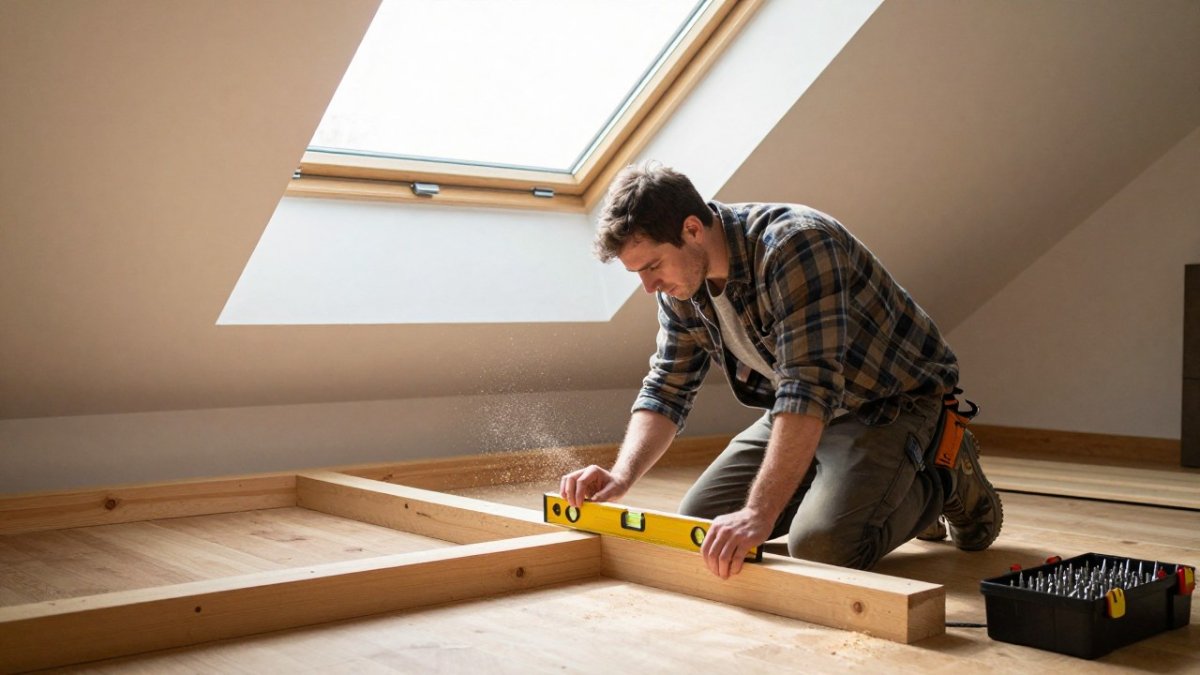
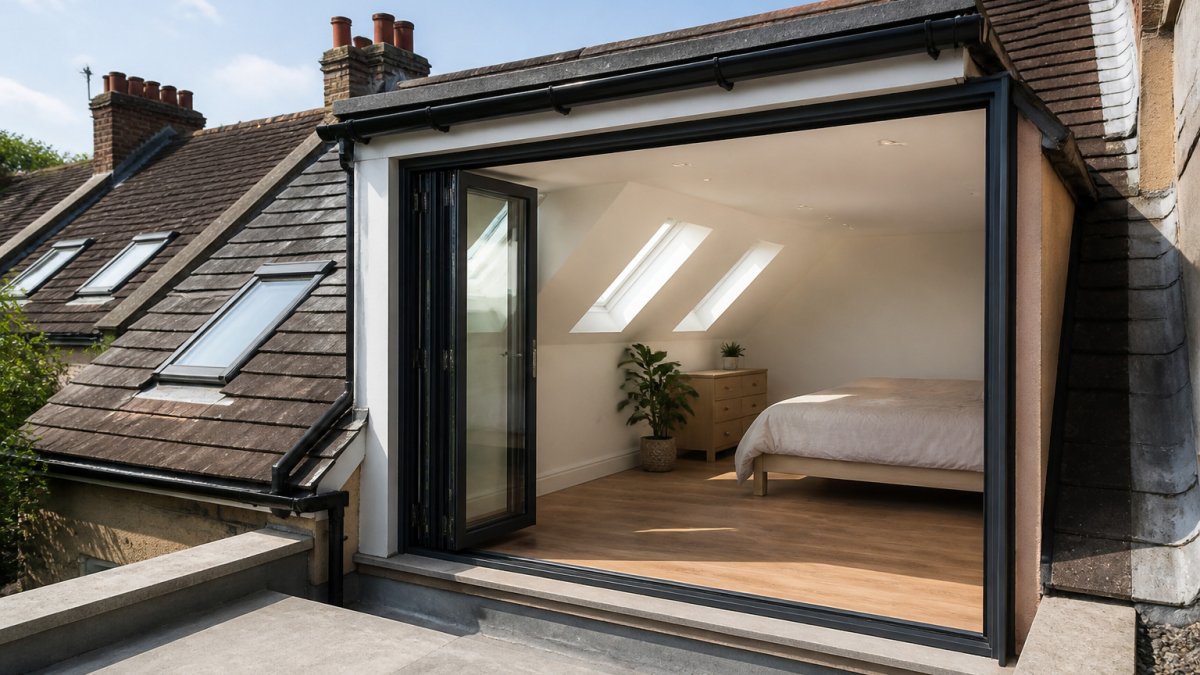
| Loft conversion | Older children or a couple | Head height and access |
| Garden room | Remote work or a teen | Year-round insulation |
| Garage conversion | Flexible extra living space | Building regulations approval |
A common mistake is choosing the cheapest option rather than the one that fits your family's daily reality. A self-contained annexe costs more but preserves independence. A shared house costs less but demands more compromise.
Multigenerational Home Design: Making Space Work for Everyone
Good design is what makes shared living comfortable rather than cramped. The goal is flexible living spaces that bring people together, plus private pockets where each generation can retreat.

Think about acoustic separation between bedrooms and living areas. Consider a second bathroom or shower room. Plan storage for every generation.
We design extensions and conversions around how a family actually moves through a home, not just how it looks on a plan.
Accessibility and Aging-in-Place Modifications
Aging-in-place modifications let older adults stay in the family home safely. These include step-free access, wider doorways, grab rails, level-access showers and downstairs bedrooms or bathrooms.
Planning accessibility early costs far less than retrofitting later. If a grandparent may eventually struggle with stairs, design a ground-floor bedroom and bathroom now. The GOV.UK guidance on home adaptations sets out how local authorities support accessibility changes, which is worth checking before you build.
Home Extension for Family Living: What to Plan Before You Build
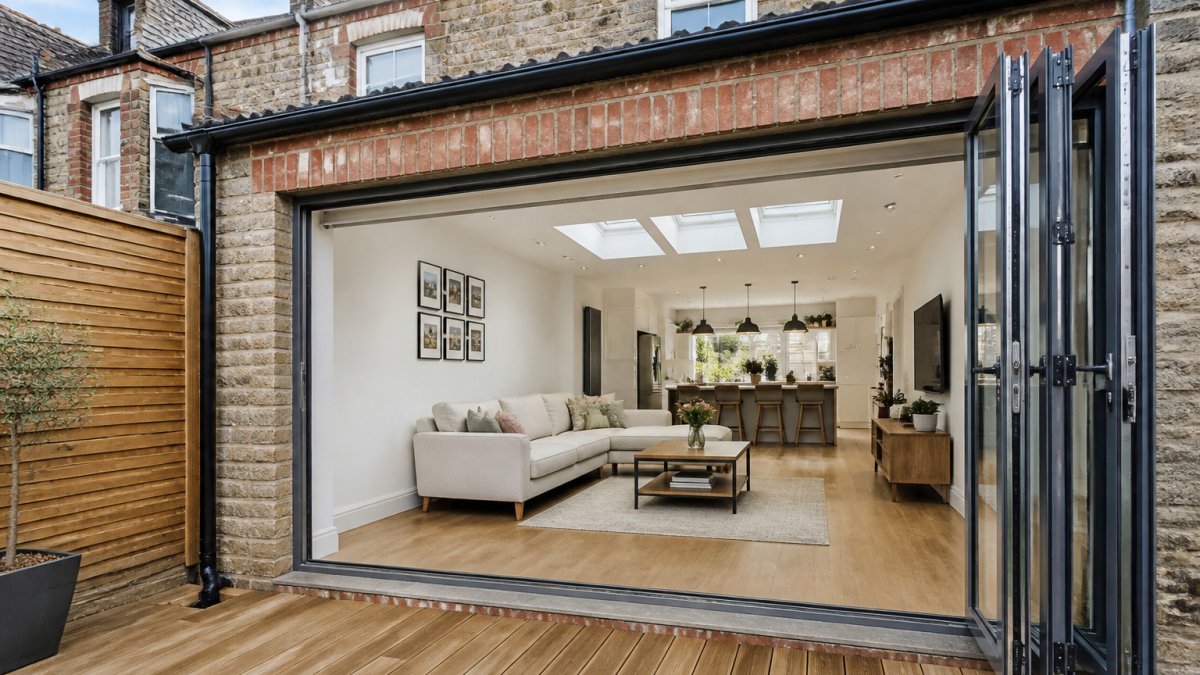
A home extension for family living is often the most practical way to gain the space three generations need. But planning matters more than speed.
Start with how the household will use the space daily. Then work through planning permission, party wall agreements for terraced or semi-detached homes, structural surveys and building regulations.
Budget realistically. Pricing depends on size, structure, materials and access, so we always recommend a detailed quote rather than a rough estimate.
Setting Boundaries, House Rules, and Resolving Conflict
Boundaries are what keep multigenerational living working long term. Without them, even close families strain.
Agree house rules early: quiet hours, shared cleaning, kitchen use, visitors, and how decisions get made. Write them down.
Conflict resolution works best when it's direct and early. Address small frustrations before they build.
The benefits of multigenerational home living are real, but they're earned through planning, communication and a home built for the way your family lives.
Frequently Asked Questions
What are the main benefits of multigenerational home living?
The main benefits include shared household expenses, pooled resources that improve housing affordability, built-in childcare and elder care support, reduced isolation for older adults, and stronger family relationships. Many families also gain practical day-to-day convenience, such as shared cooking, errands, and household responsibilities. For those needing more room, a home extension for family living can create the flexible spaces that make these arrangements work well.
What are the challenges of multigenerational living?
Common challenges include a lack of privacy, differing routines, and disagreements over household rules or finances. Conflict can arise when expectations are not discussed upfront. Setting clear boundaries, agreeing on shared expenses, and planning flexible living spaces with separate entrances or zones can reduce friction. It helps to review arrangements periodically as care needs or circumstances change.
How can families maintain privacy in a multigenerational home?
Privacy comes from both design and house rules. On the design side, separate entrances, self-contained annexes, or a garden room can give each generation their own space. Inside, sound insulation, dedicated bathrooms, and flexible living areas help. On the rules side, agree on quiet hours, shared areas, and visitor expectations. A professional home extension for family living can add these private zones without moving house.
What should families agree on before living together?
Before moving in together, agree on how household expenses will be split, who owns or rents the property, and what happens if circumstances change. Discuss caregiving expectations, childcare responsibilities, and house rules around noise, guests, and shared spaces. It also helps to put any financial or ownership agreements in writing. Reviewing these points early prevents misunderstandings later.
Sharing a home across generations only works when the space genuinely fits everyone. F23 CONTRACTORS designs and builds loft conversions, home extensions and garden rooms that give families room to live together without living on top of each other. With over 20 years of building experience across Bristol, Bath and Somerset, we handle planning, building regulations and craftsmanship from start to finish. Get started with F23 CONTRACTORS and expand your living space the right way. Find out more >